For elevator procurement agents, determining whether to recommend a circular elevator requires looking beyond mere aesthetics; one must also verify product specifications, hoistway conditions, project suitability, installation requirements, and the clarity of supply arrangements.
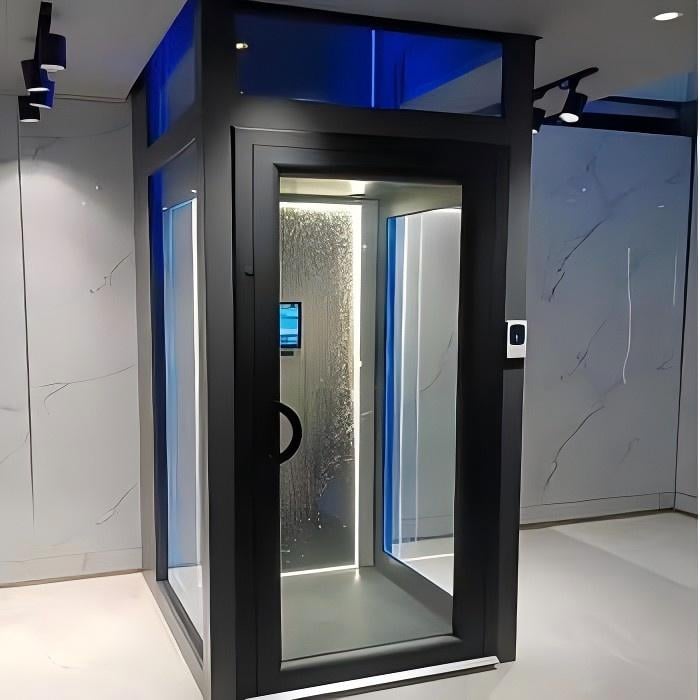
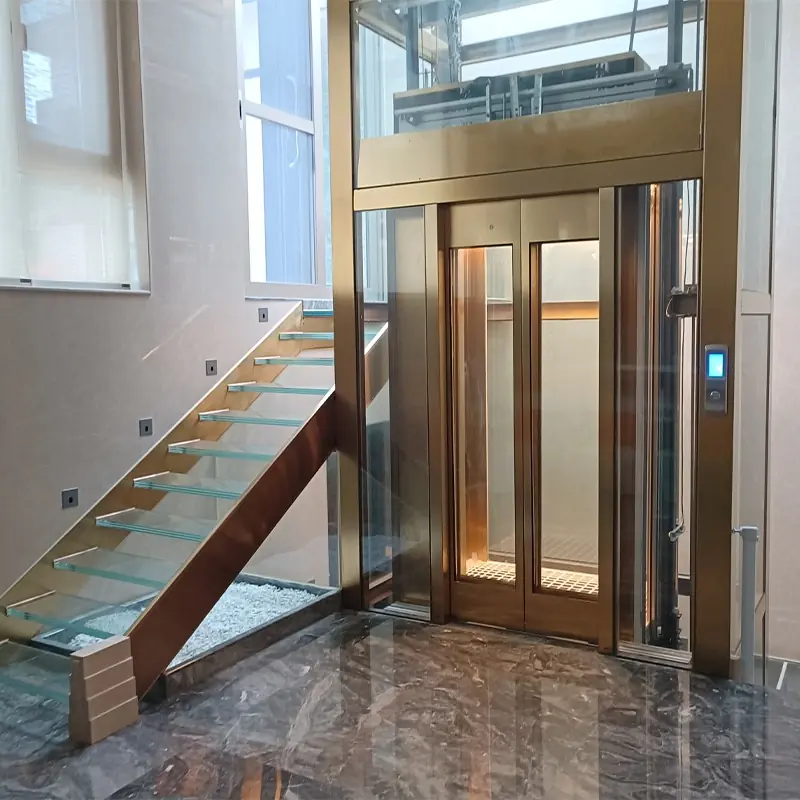
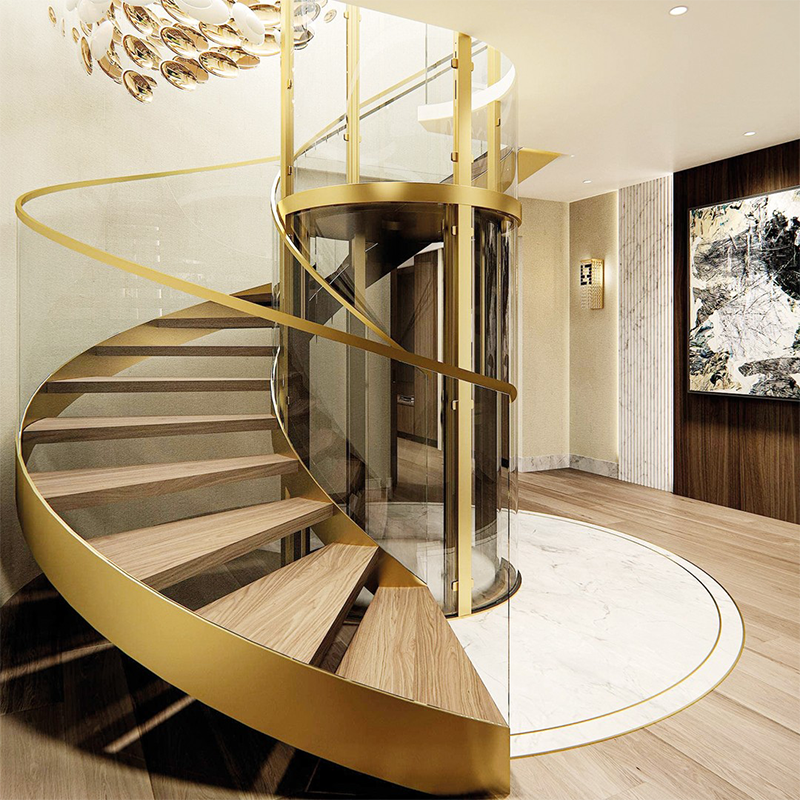
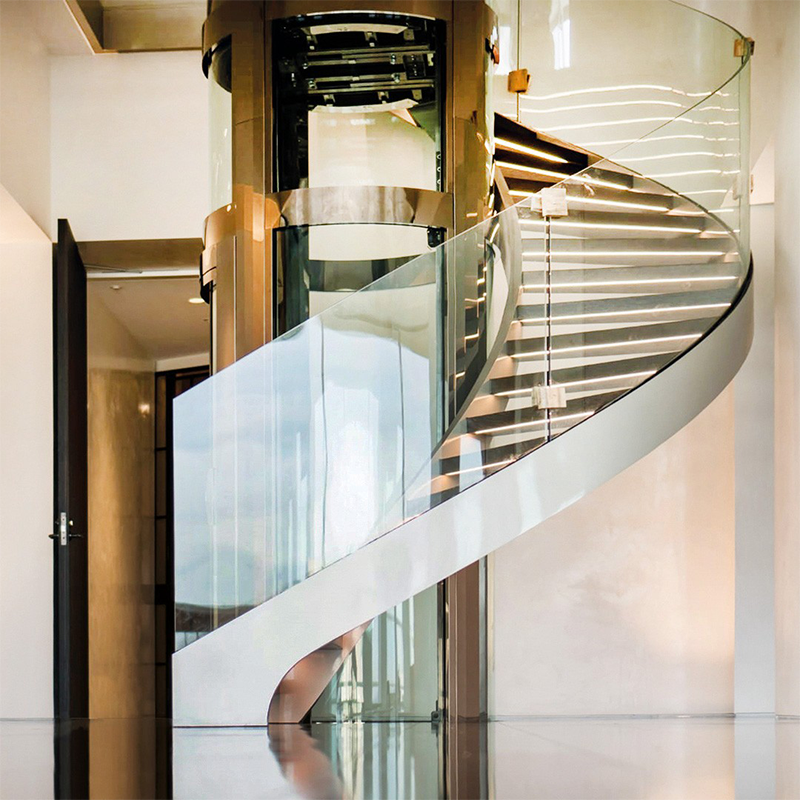
Recently, a FUJI stainless steel circular elevator was successfully installed at a project site in Russia. Featuring a machine-room configuration and a concealed counterweight design, this model is ideal for architectural projects that call for a circular profile, curved glass, and a distinctive visual presence. The following overview summarizes key project details from a procurement agent's perspective, facilitating initial project assessment and client communication.
Upon receiving the client's requirements, the procurement agent typically needs to first assess whether the building conditions meet the specifications for elevator installation. The key parameters for this project are as follows:
| Parameter | Project Configuration | ||
| Project Location |
RUSSIA |
||
| Elevator Brand | FUJI | ||
| Product Type | Stainless steel circular elevator | ||
| Configuration | With machine room | ||
| Machine Room Height | 2200mm | ||
| Hoistway Size | 1800mm | ||
|
Concealed counterweight design | ||
| Floor Configuration | 4/4/4 | ||
| Rate Speed | 1.0m/s | ||
| Overhead Height | 4200mm | ||
| Pit Depth | 2100mm | ||
| Glass Specification | 6+6mm |
This data serves as a basis for the preliminary project screening. Before finalizing the quotation and technical specifications, further verification is required regarding the car diameter, door opening method, door opening dimensions, load capacity, drive system, power supply conditions, local regulations, and final interior finish requirements.
It should be noted that the "6+6mm" specification provided by the user is currently recorded only as a glass dimension; the specific glass type, structural composition, and certification requirements must be determined based on the final technical documentation.
II. What value does the concealed counterweight design offer to procurement agents?
Circular elevator projects often face a challenge: balancing the need to maintain a circular aesthetic with the requirement to fit the car, guide rails, counterweight, and door system into a limited hoistway. The concealed counterweight design integrates the counterweight system into the overall hoistway layout, minimizing the visual impact of counterweight components on the circular profile and primary viewing areas.
From a procurement agent's perspective, this design offers three practical benefits.
First, it makes it easier to explain the product's aesthetic advantages to clients. Circular elevators are typically used in high-end residences, commercial spaces, hotels, showrooms, or other projects where design impact is paramount. With a concealed counterweight, the client’s view focuses on the complete circular frame, curved glass, and the elevator interior, rather than on conspicuous mechanical components.
Second, it facilitates early-stage communication regarding architectural requirements. For this project, the hoistway diameter is 1,800 mm; the concealed counterweight design allows the technical team to optimize equipment layout within these constraints. However, this does not mean the same solution applies to every project; agents must still provide hoistway drawings, architectural plans, and site dimensions for technical verification.
Third, it helps maintain product differentiation. When clients compare standard square elevators, standard panoramic elevators, and circular elevators, the concealed counterweight design serves as a key technical selling point, enabling agents to highlight both the product's aesthetic appeal and its engineering design features.
III. What types of projects are suitable for this product?
Based on the configuration and installation results of this project, the product is ideal for projects where the client has specific aesthetic requirements for the elevator and the architectural space allows for customized integration.
For instance, if a client wants the elevator to serve as an interior visual focal point or desires a sense of openness created by curved glass, the circular structure, stainless steel finish, and concealed counterweight design can be highlighted as key features. If the hoistway space for a client's project is limited, dimensions for the hoistway and car, the door system, and equipment layout must be confirmed prior to quoting; feasibility cannot be determined solely based on product photos.
For purchasing agents, the most effective sales approach is to verify building conditions before recommending product configurations, and to ascertain the client's spatial and usage requirements before discussing aesthetic materials and decorative schemes. This minimizes the need for subsequent modifications caused by mismatches in dimensions, door openings, or equipment specifications.
IV. What can agents show clients after on-site installation is complete?
The project video covers factory pre-assembly, product inspection, and the completed on-site installation. Agents can utilize this video in various client interactions:
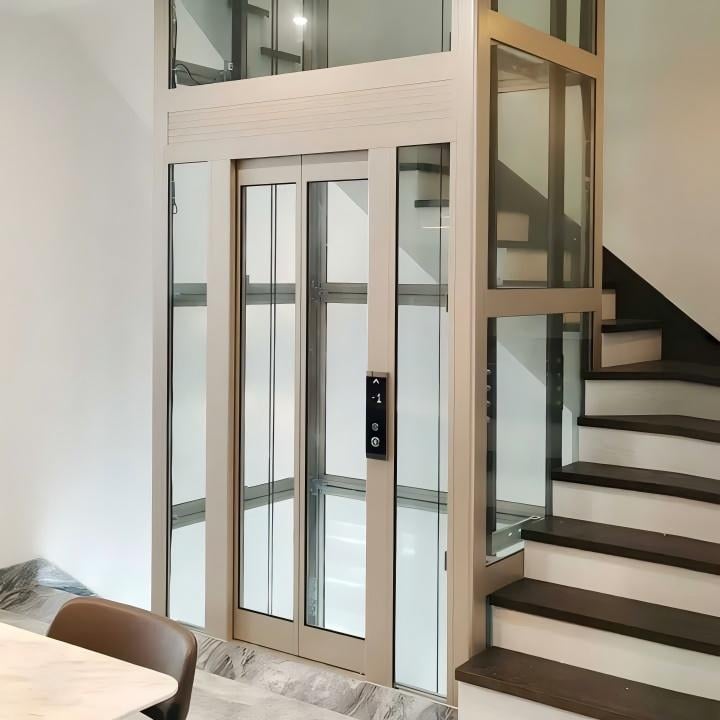
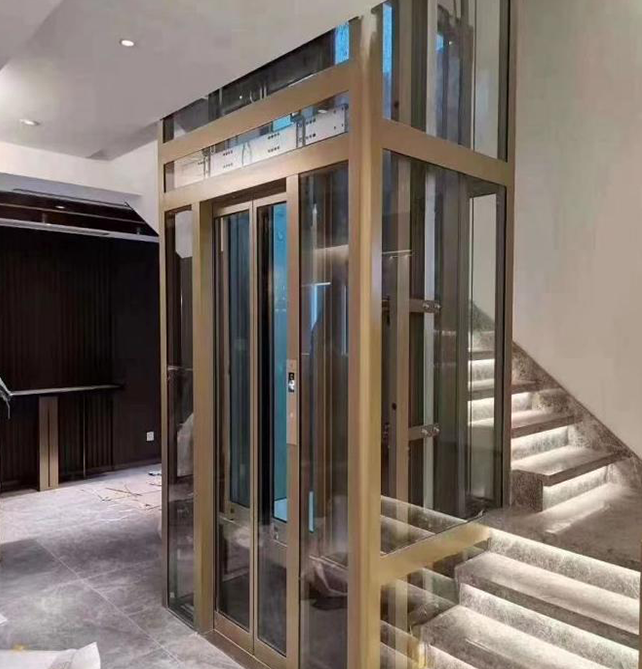
During the product introduction phase, the video can showcase the cylindrical structure, curved glass, stainless steel finishes, interior lighting, and floor display system, providing the client with a clear visual of the finished product.
During technical discussions, the video can be used alongside project parameters to explain the machine-room configuration, concealed counterweight design, 4/4/4 landing arrangement, 11.4m travel height, and 1.0m/s operating speed. Note, however, that the video illustrates only the appearance and installed state; it cannot replace formal technical drawings, quotations, calculation data, or acceptance documentation.
During project follow-up, on-site installation footage can demonstrate FUJI’s project execution expertise, spanning everything from factory pre-assembly to on-site installation. For purchasing agents, this is more effective than simply showing product renderings when it comes to building client confidence in the company's ability to successfully deliver the project.
V. What details must the procurement agent confirm with the manufacturer beforehand?
Before submitting a formal proposal to the client, the agent is advised to confirm at least the following information:
| Confirmation Category | Information to Be Confirmed |
| Information to Be Confirmed | Hoistway dimensions, door opening dimensions, overhead height, pit depth, and machine room conditions |
| Elevator Configuration | Number of floors/stops, travel height, rated speed, rated load, and door opening method |
| Structural Design | Car diameter, guide rail position, concealed counterweight layout, and equipment maintenance space |
| Exterior Materials | Stainless steel surface finish, complete glass specifications, car flooring, lighting fixtures, and handrails |
| Project Execution | Transportation conditions, on-site installation, commissioning, inspection and acceptance, and the scope of after-sales service |
| Compliance Documents | Local regulations, certification requirements, technical documentation, and inspection and acceptance documents |
The earlier these details are confirmed, the more smoothly the subsequent stages—such as quoting, contracting, production, and on-site installation—will align. For overseas projects, it is also essential to confirm requirements regarding language, file formats, sea-freight packaging, on-site unloading conditions, and local installation support in advance.
If you currently have procurement needs, please feel free to contact us at any time.
 Hot News
2026-08-19
2026-04-03
2026-04-03
2025-11-29
2025-11-05
2025-11-01
Welcome to our elevator website, featuring a wide range of luxury round home elevators, passenger elevators, panoramic elevator, sightseeing elevators . Explore detailed descriptions and innovative designs tailored for modern homes and commercial spaces. Discover the perfect solution to enhance accessibility and style.
Banqiao Road South Head, Pingyi Economic Development Zone, Linyi, Shandong, China
Copyright © Linyi Fuji Intelligent Technology Co,.Ltd. All Rights Reserved - Privacy Policy - Blog